10 Safer Open-Water Confidence Skills for Adults (Before Beach Season)

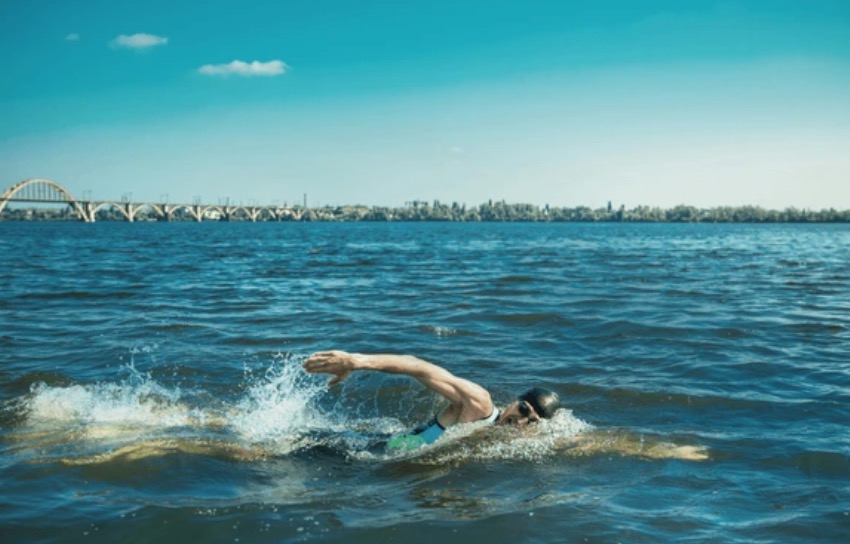
June is when many adults start thinking about beaches, weekend trips, and summer swim goals. If you are building confidence, open water can feel totally different than the pool. The water is darker, there are no lane lines, and conditions can change quickly.
The good news is that open-water confidence is not about being fearless. It is about having a simple safety routine and a few skills you can practise on purpose. Below are 10 practical skills, each with a clear takeaway and an easy drill, so you can feel prepared before beach season.
1. Calm Confidence: Start Where Conditions Are Predictable
A strong first open-water session begins with the right environment. Early confidence builds best in supervised areas with clear entry and exit points, predictable depth, and calmer water. Your goal is not distance yet. Your goal is familiarity.
If you are new, treat open water like exposure training: short, simple, repeatable. Pick a spot where you can stand when needed and where you can stay close to shore. If crowds, wind, or waves feel overwhelming, that is useful feedback, not failure. Scale down, reset, and come back.
Try this first-time routine (10 to 15 minutes):
- Walk in slowly to waist-deep water
- Put your face in and blow bubbles for 5 seconds, repeat 3 times
- Float on your back for 10 seconds, then stand
- Swim 30 to 60 seconds parallel to shore, then stop and rest
You are teaching your body that open water can be calm and manageable.
Source: https://www.toronto.ca/explore-enjoy/recreation/swimming/
2. Safer Gear Basics: Make Visibility and Comfort Non-Negotiable
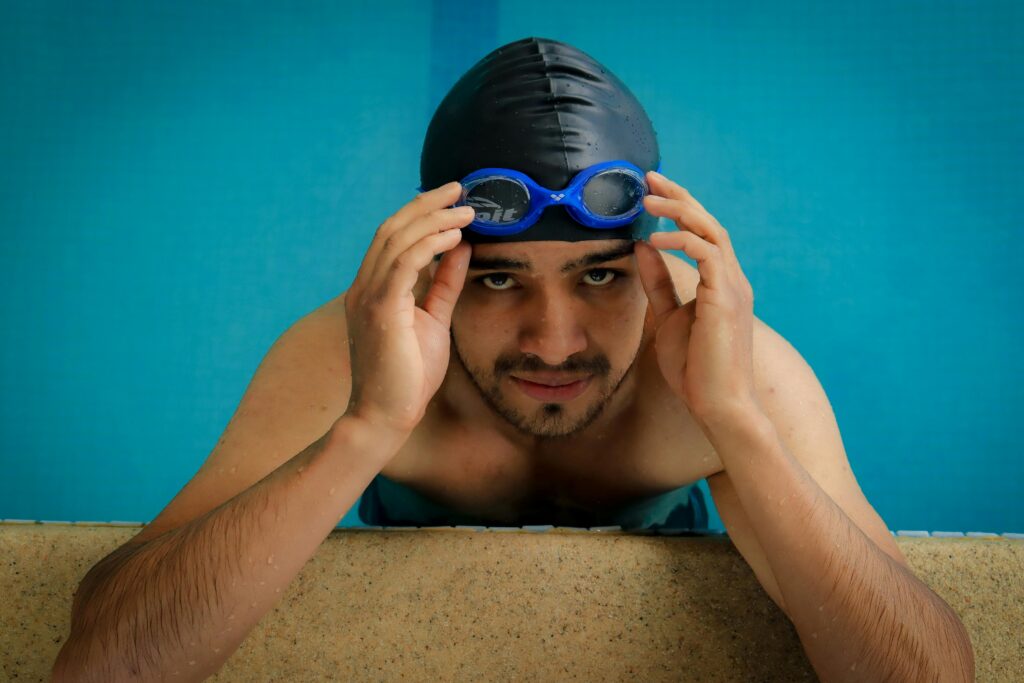
Open water feels harder when your brain has fewer “safe” cues. The simplest way to reduce that stress is to be visible and comfortable. The two most helpful beginner items are a bright swim cap and a tow-float buoy.
Helpful basics to consider:
- Bright cap for visibility
- Tow-float buoy for visibility and a quick rest option
- Goggles that do not leak and do not pinch
- Earplugs if cold water makes you feel off-balance
- A wetsuit is only if you have practised in it first
The point of gear is not to look advanced. It is to remove avoidable stressors so you can focus on breathing and control.
Source: https://www.lifesavingsociety.com/
3. Cold-Water Calm: Teach Your Breathing to Slow Down
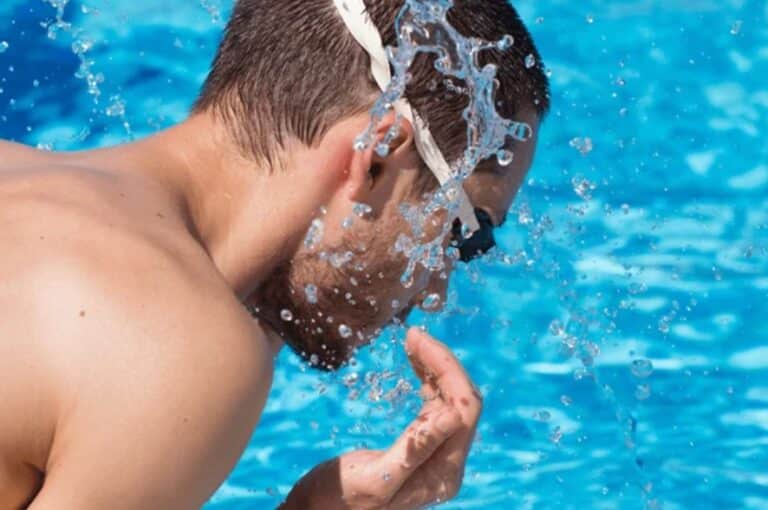
Even in June, the water can feel surprisingly cold. Cold shock can trigger fast breathing and tension, which can feel like panic. This is common, and it is trainable.
Use a “slow entry” routine:
- Splash water on your face and neck
- Face in, exhale bubbles for 5 seconds, repeat 3 times
- Float briefly, then stand
- Start with an easy 30 to 60 second swim, then pause and assess
If your breathing spikes, you are not “bad at swimming.” Your body is reacting to temperature and stress. Give it time. You are building tolerance.
Source: https://www.redcross.ca/
4. Smooth Sighting: Look Forward Without Sinking Your Hips
Sighting is one of the biggest differences between pool swimming and open water. Many adults lift the whole head too high, their hips drop, their legs sink, and breathing gets harder. The goal is a glance, then back to neutral.
Sighting cues that work:
- Keep the head low, eyes forward, then return to looking down
- Think “peek”, not “lift.”
- Pair sighting with a side breath so you stay relaxed
Mini drill (2 to 4 minutes):
- Swim easily for 6 strokes
- Quick peek forward
- Breathe to the side
- Repeat calmly
When sighting stays small and controlled, open water feels far less chaotic.
Source: https://www.swimming.ca/

5. Reset Skill: Know Exactly What to Do When You Feel Spiked
In open water, confidence skyrockets when you know you can stop safely and calm your breathing. This is a must-have skill for adult swimmers.
Your simple reset routine:
- Roll to your back
- Exhale slowly
- Inhale calmly
- Gentle kick to stay stable
- When ready, roll back and restart easily
Practise this in shallow water first. The goal is to make this feel automatic, not dramatic. When your brain truly believes “I can reset anytime,” fear drops fast.
6. Smart Route Choice: Swim Along the Shore Before You Go Out
A common beginner mistake is swimming straight away from shore too early. Swimming parallel to shore is safer and lowers mental pressure because you always have an easy exit plan.
A confidence-building route:
- Choose a landmark along the shore
- Swim 2 to 4 minutes parallel
- Stop, reset, and assess
- Repeat 2 to 4 times
Early on, time-based goals are usually better than distance-based goals. “Two calm minutes” builds confidence faster than “I need to reach that far point.”
Source: https://www.toronto.ca/explore-enjoy/recreation/swimming/
7. Buddy Power: Make Boundaries Part of the Plan
Open water is not the place for solo “testing yourself,” especially early on. A buddy makes everything safer and often makes you feel calmer before you even start.
Buddy basics that matter:
- Agree on a route and a time limit
- Stay close enough to communicate
- Wear bright caps so you can see each other
- Decide what “stop” means and respect it immediately
If you do not have a buddy, choose supervised areas and keep sessions short. Safe choices are confident choices.
Source: https://www.redcross.ca/
8. Wave-Ready Breathing: Give Yourself More Than One Option
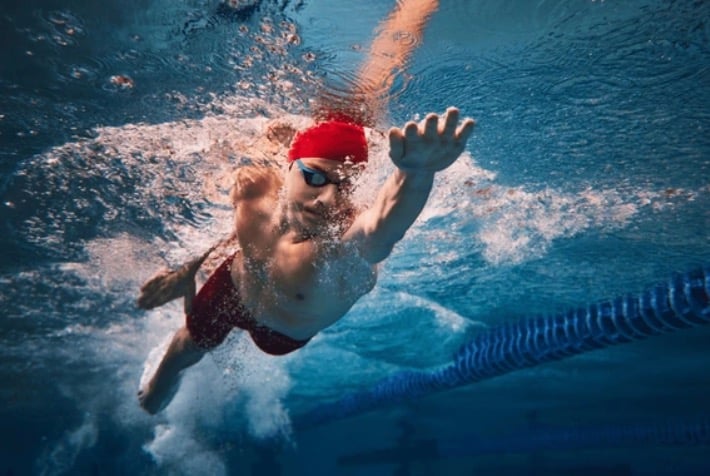
Small waves and chop can make breathing feel chaotic. One of the best confidence upgrades is having multiple breathing options, so you are not stuck.
What to practise in the pool first:
- Breathing to both sides (even if one side is your favourite)
- Longer exhales underwater to reduce panic
- Staying relaxed when timing is imperfect
Simple pool set:
- 6 strokes, breathe right
- 6 strokes, breathe left
- Repeat for 4 easy lengths
When you can breathe on either side, you can choose the calmer side in open water.
Source: https://www.swimming.ca/
9. Steady Endurance: Build Fitness Without “Bravery Swims.”
A lot of adults try to prove confidence with one long swim, then finish exhausted and anxious. The faster path is short intervals with real rest, just like pool training.
Beginner open-water set:
- 6 x 2 minutes easy swim
- 1 minute rest (float or stand if possible)
- One focus cue per rep: calm exhale, soft hands, steady kick
Track calmness and consistency, not speed. Your goal is repeatable sessions that feel manageable.
Source: https://csep.ca/

10. Confident Decision-Making: Know When to Skip and Feel Proud
The most confident swimmers know when not to swim. Conditions can change quickly, and choosing a pool session instead is smart training.
Skip or scale down if:
- Entry or exit points are unclear
- Wind, waves, or currents feel unpredictable
- You feel panicky before you start
- You are alone, or visibility is poor
- You are too fatigued to keep your breathing calm
Boundaries are a skill. When you respect them, you build trust in yourself, and that is real confidence.
Conclusion
Open water can feel intimidating at first, but it gets easier quickly when you approach it with a calm plan. If you remember just three things, make them these: start in predictable conditions, stay visible and close to shore, and practise a reset routine you can use anytime. Those basics turn open water from “unknown and scary” into “manageable and repeatable.”
If you want support putting these skills into action, structured swim sessions make a big difference. In guided lessons, you get clear drills, real-time feedback, and a progression that matches your comfort level, so you are not guessing what to practise next. That is often the fastest way to build confidence before beach season and feel genuinely in control in the water.